Search After AI Answers: How SaaS Companies Should Write for People, Search Engines, and Answer Engines
A user may now receive an AI-generated summary before clicking a result. That can reduce some informational traffic, but it also creates new opportunities for...
Published
August 10, 2026
Reading Time
6 min read
Article Size
1,058+ words
Social Tags
Share This Article
Article Overview
This article is part of the NHR Soft knowledge base and is structured to help readers understand the topic quickly, review practical steps, and share product or engineering insights with confidence.
Search is changing, but usefulness still wins
A user may now receive an AI-generated summary before clicking a result. That can reduce some informational traffic, but it also creates new opportunities for clear, trusted sources to be cited and discovered. The wrong response is to produce large volumes of generic AI text. The better response is to publish information that a model, search engine, and human can all understand and verify.
Google's current guidance is direct: foundational SEO remains relevant to generative search. A page still needs to be indexable, technically sound, and helpful. Unique, expert-led content matters more than artificial "AEO" or "GEO" tricks.
Write for a specific decision or task
Every article should answer one primary question. Examples for a software company include:
- How does a permission work, and why is it needed?
- What problem does a product solve in daily use?
- How was a technical architecture chosen?
- What does local-first processing mean for user data?
- How can a business evaluate a workflow before buying software?
- What are the trade-offs between a browser extension and a web application?
A focused page is easier to title, structure, summarize, link, and measure. It is also more likely to be useful than a broad article called "Everything You Need to Know About AI."
Use a structure that supports scanning and extraction
People scan before they commit to reading. Search and answer systems also benefit from clear organization. A strong SaaS article can include:
- A direct summary near the beginning.
- Descriptive headings that match real questions.
- Short paragraphs and concrete examples.
- Lists or tables only when they improve comparison.
- Definitions before specialist terms.
- Visible dates and authorship.
- Links to primary sources and related internal pages.
- A short FAQ based on genuine reader questions.
This is not "writing for robots." It is good information design.
Publish evidence that cannot be copied easily
Commodity content is easy to generate and difficult to trust. A software company has better raw material:
- Engineering decisions and trade-offs.
- Product screenshots and annotated workflows.
- Benchmarks with a described method.
- Permission and privacy explanations.
- Before-and-after process maps.
- Lessons from support questions.
- Case studies with measurable results and limitations.
- Templates, checklists, and small open-source components.
A competitor can repeat the conclusion, but it cannot easily reproduce the underlying experience and evidence.
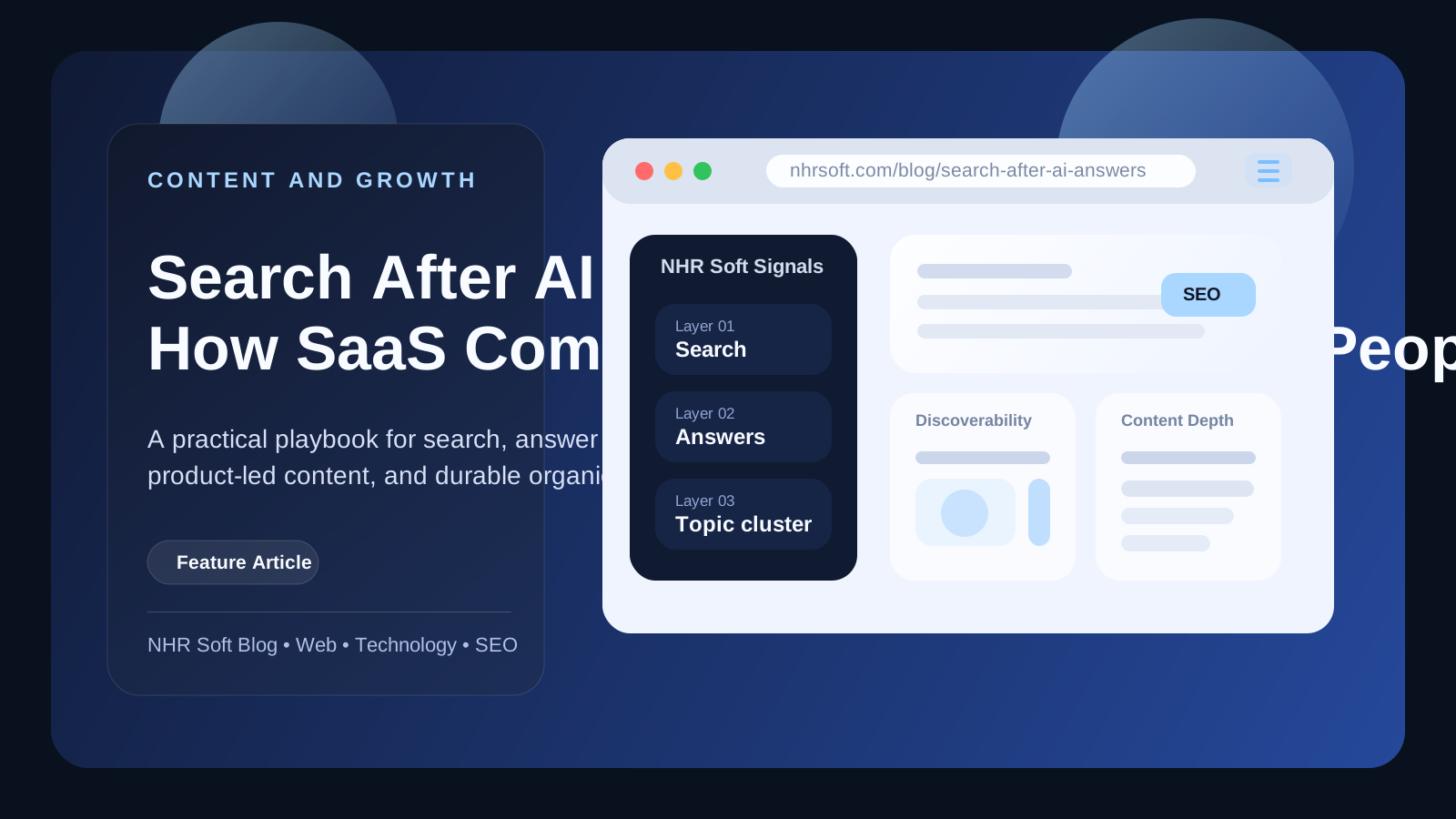
Build topic clusters around product problems
A blog should not be a random sequence of news reactions. Organize articles around a few themes connected to the products and customers.
For NHR Soft, practical clusters could include:
Browser productivity and plugins
Extension architecture, permissions, local storage, onboarding, Chrome Web Store quality, research workflows, and plugin retention.
Accessible and user-controlled browsing
Motion, typography, reading focus, clutter, personalization, co-design, privacy, and compatibility with changing websites.
SaaS and industry systems
Inventory workflows, association management, pharmaceutical records, implementation, data migration, reporting, and responsible AI automation.
Lean engineering
Rust, WebAssembly, performance, local-first architecture, open source, testing, and how AI fits into development without replacing judgment.
Each article should link to one or two related articles and one relevant product or project page. Internal links help readers continue a useful journey rather than jump directly to a sales pitch.
Create product-led content without turning every article into an advertisement
Self-promotion works when it is a relevant example. An article about local-first design can mention an NHR Soft product that stores preferences locally. An article about accessible controls can point to CalmBrowser or ReadEase. An article about vertical SaaS can reference the company's project experience.
The mention should answer "how does this principle appear in practice?" It should not interrupt the article with repeated claims that the company is the best. Trust grows when the content teaches first and invites the reader second.
Make the site technically easy to understand
Content quality cannot compensate for a blocked or confusing site. Check that important pages are crawlable, use descriptive titles and meta descriptions, have one clear canonical URL, load well on mobile, and connect through normal links. Use structured data only when it accurately represents visible content.
For AI discovery, also review crawler controls intentionally. Do not block legitimate search or answer-engine crawlers by accident, and do not grant access to private content. Public documentation and private customer data require different rules.
Measure more than clicks
AI answers may influence a buyer without producing a traditional visit every time. Use a broader measurement set:
- Search impressions and clicks by topic.
- Branded search growth.
- Referral traffic from search and AI products where available.
- Newsletter or contact conversions.
- Product-page visits from educational content.
- Install, trial, or demo activation after content visits.
- Assisted conversions across longer journeys.
- Links and citations earned from other sites.
- Support questions reduced by clear documentation.
The objective is not maximum traffic. It is qualified discovery, trust, and useful product action.
A 12-week publishing rhythm
A small team can build momentum with one strong article each week:
- Four problem-and-solution articles tied to user questions.
- Three engineering articles with architecture or performance lessons.
- Two product guides that explain setup, permissions, and privacy.
- Two vertical workflow articles for business buyers.
- One transparent case study or quarterly learning report.
Refresh high-performing articles when platforms, policies, or product behavior changes. A maintained library is more valuable than a large abandoned archive.
Frequently Asked Questions
Is SEO becoming irrelevant because of AI answers?
No. Search systems still need discoverable, reliable pages. The click pattern may change, so teams should focus on useful content, technical accessibility, brand demand, and conversion quality rather than traffic alone.
Should every article be written with AI?
AI can help research, outline, edit, and identify gaps, but the company should add original experience, verify facts, and take responsibility for the final page. Generic automated publishing can weaken trust.
Does a SaaS company need an llms.txt file?
It may be useful in some ecosystems, but it is not a substitute for crawlable pages, clear structure, normal links, and valuable content. Follow current guidance from the platforms that matter to the site rather than treating one file as a ranking shortcut.
Sources and further reading
- Google Search Central - Guide to optimizing for generative AI features
- Google Search Central - Creating helpful, reliable, people-first content
- OpenAI - Crawler and user-agent documentation
- NHR Soft - Blog
- NHR Soft - The NHR Soft Open Source Philosophy
Public Discussion
Name and Comment
Share your thoughts on this article. Your name and comment will be published right away on the page.
Published Comments
0
Start the conversation
No comments yet. Be the first person to leave a public note on this article.