Due-date reminders
Track overdue, due-soon, and upcoming bills with browser reminders, badge counts, snooze actions, and daily digest views.
Chrome Extension
A local-first bill reminder for due dates, payment records, receipt copies, and year-round payment projections. It helps you remember what is due without processing payments or collecting card details.
Local
storage
Receipts
attached
Year
projection
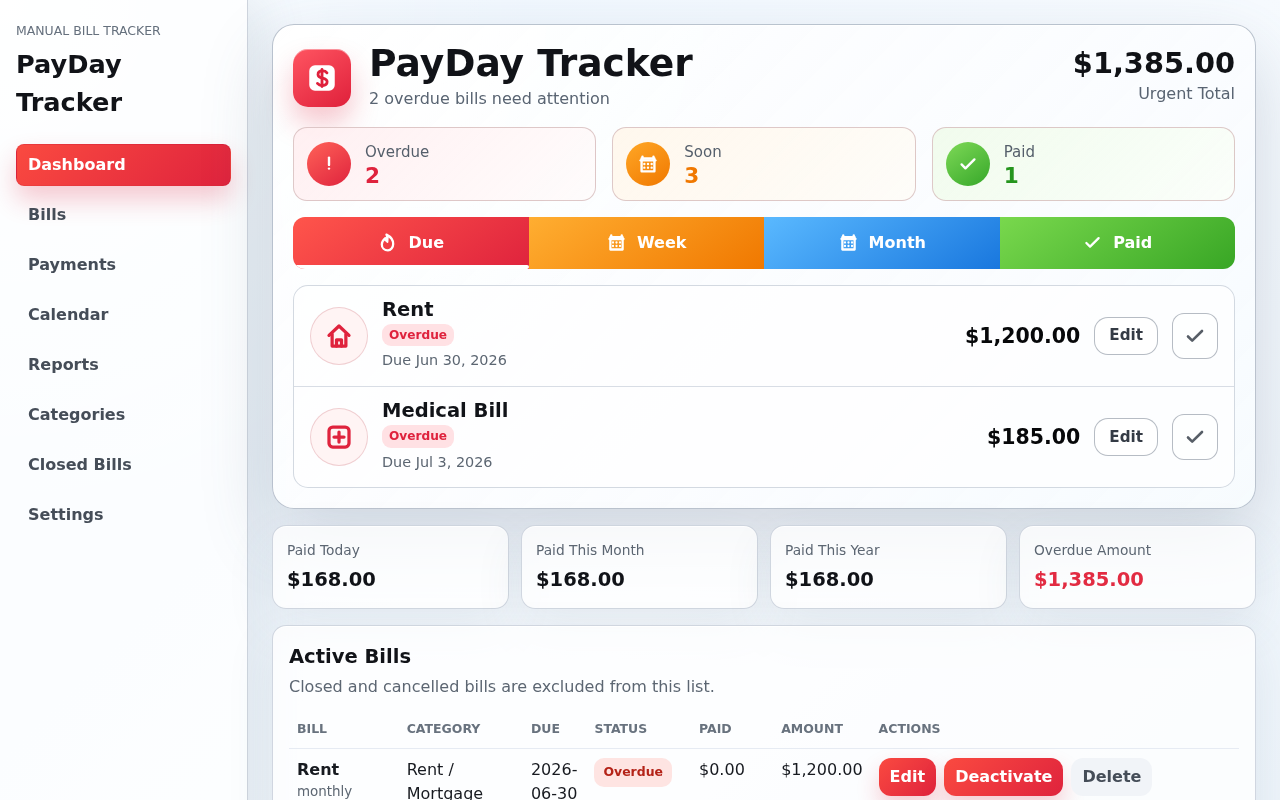
Track overdue, due-soon, and upcoming bills with browser reminders, badge counts, snooze actions, and daily digest views.
Record full or partial payments, add notes or transaction references, and tag receipt images or PDFs to payment history.
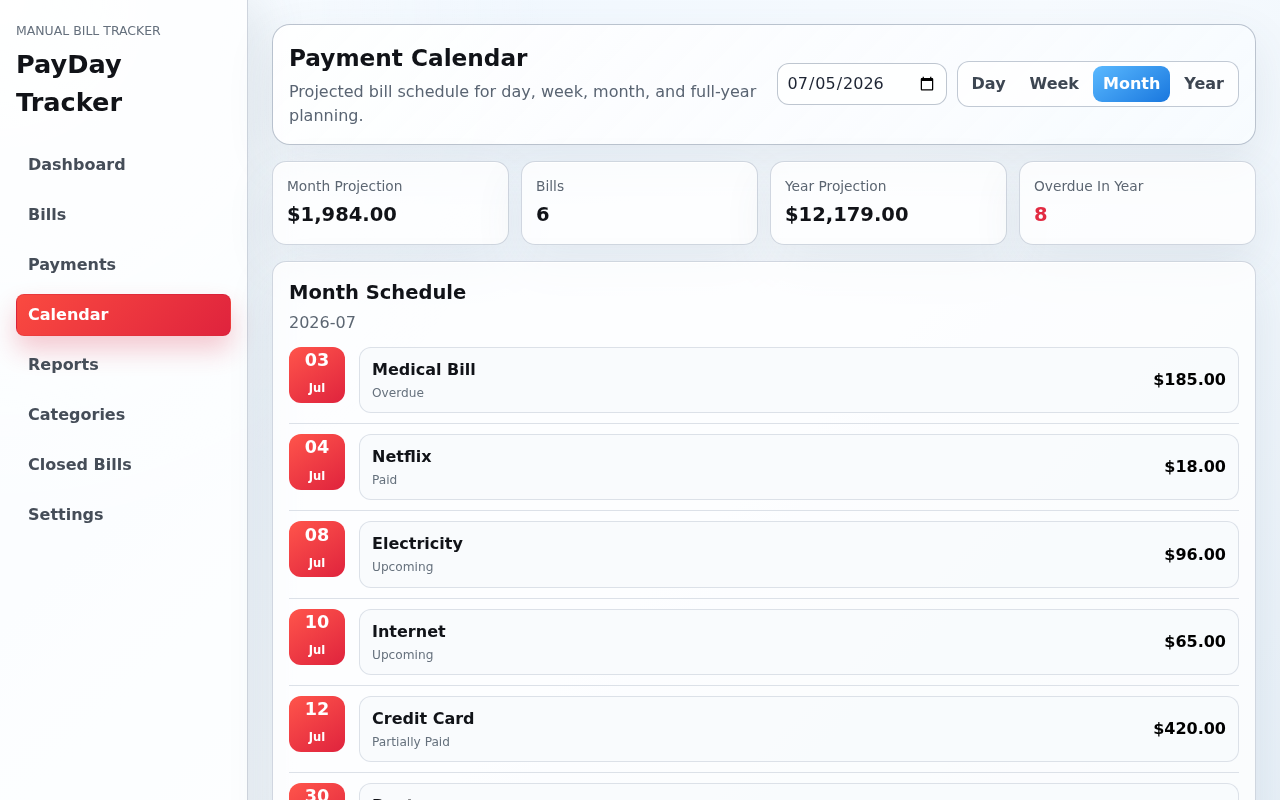
Review the bill calendar by day, week, month, and year, then open an event to see bill details or add a payment from the calendar.
App Screenshots
The dashboard keeps urgent totals visible, while the calendar turns recurring bills into a readable projection.
Privacy Model
PayDay Tracker has no payment processing role. Bill amounts, due dates, payment notes, and receipt attachments are stored locally unless the user chooses an optional backup or calendar feature.
Bills, settings, reminders, payment records, and receipt references live in Chrome extension storage by default.
The extension records payments for tracking only. It does not move money, collect card numbers, or handle bank credentials.
Backup and restore workflows are user-controlled and exist to protect the user's own bill records.
Receipt files are stored only when the user attaches them to a payment record for future reference.
Use PayDay Tracker to plan due dates, record what was paid, preserve receipts, and review payment projections without adding payment processing risk.